Uncategorized
Dollar Store NNN Investments in 2026: What Investors Must Know Before They Buy
3 min read

Dollar Store NNN Investments in 2026: What Investors Must Know Before They Buy
For years, dollar store properties were treated as a near-homogeneous asset class — reliable, recession-resistant, and easy to underwrite. In 2026, that assumption is no longer safe. The three dominant players in the discount retail sector — Dollar General, Dollar Tree, and Family Dollar — have diverged dramatically in their financial health, store strategies, and risk profiles. For NNN investors, understanding these distinctions has never been more important.
A Sector Once Defined by Uniformity Is Now Defined by Divergence
The dollar store segment earned its reputation among net lease investors by offering long-term leases, corporate guarantees, and essential-retail demand drivers that held up even during economic downturns. These fundamentals haven’t disappeared — but they now vary significantly depending on which brand sits on the land. In 2026, treating Dollar General, Dollar Tree, and Family Dollar as interchangeable assets is a underwriting mistake that could cost investors meaningfully in yield, credit quality, and long-term value.
Dollar General: Still the Benchmark, but Headwinds Are Real
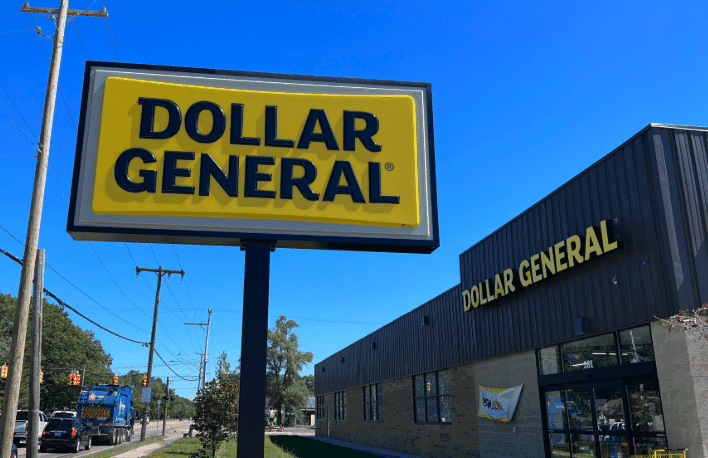
Dollar General remains the gold standard among dollar store NNN investments. With thousands of locations across the country — many in rural and suburban markets with limited retail competition — the chain continues to command the tightest cap rates in the segment. Its strong investment-grade credit rating and consistent store-level performance make it a preferred asset for 1031 exchange buyers and conservative institutional capital alike.
That said, Dollar General is not without challenges. The company has faced pressure from organized retail crime, rising shrink costs, and a workforce that has drawn regulatory scrutiny. Investors should pay close attention to lease vintage, remaining term, and whether a location carries a traditional or modified lease structure, as newer builds may differ from older ground leases in meaningful ways.
Dollar Tree: A Brand in Transition
Dollar Tree has undergone significant strategic repositioning in recent years, including its now-completed price point expansion beyond the single-dollar model. The brand’s corporate fundamentals remain solid, and its investment-grade rating continues to provide a measure of comfort for NNN buyers. However, investors evaluating Dollar Tree assets should be aware that the company is actively reassessing its real estate footprint, which introduces some uncertainty around lease renewals and long-term occupancy at specific locations.
Family Dollar: Elevated Risk Demands Greater Scrutiny
Family Dollar presents the most complex underwriting challenge of the three. Following years of operational struggles, store closures, and margin compression, the brand has been separated from Dollar Tree’s corporate structure, raising questions about the strength of its lease guarantees going forward. Investors considering Family Dollar NNN assets in 2026 should conduct thorough due diligence on the specific lease guarantor, remaining term, and local market demand. Properties with short lease durations or in softer trade areas warrant particular caution.
Key Underwriting Considerations Across All Three Brands
- Lease guarantor strength: Verify whether the lease is guaranteed at the corporate or subsidiary level — this distinction carries significant credit implications.
- Remaining lease term: Longer terms with options reduce rollover risk and typically support stronger resale values.
- Location quality: Dense suburban or rural markets with limited competition tend to support stronger long-term store performance.
- Rent escalations: Many legacy dollar store leases are flat — newer deals may include modest bumps that help offset inflation over time.
- Cap rate spread: As of 2026, Dollar General assets trade at tighter cap rates than Family Dollar, reflecting the market’s recognition of differentiated credit risk.
The Bottom Line for NNN Investors
Dollar store properties remain a compelling component of a diversified net lease portfolio — but only when selected with discipline. The days of treating this sector as a monolith are over. In 2026, the most informed investors are those who evaluate each brand, each lease, and each location on its own merits rather than relying on segment-wide assumptions. As always, working with experienced net lease advisors and conducting rigorous due diligence are the non-negotiables of sound NNN investing.
Sources
- CoStar Group — Net Lease Market Research (costar.com)
- Dollar General Corporation — Investor Relations (ir.dollargeneral.com)
- Dollar Tree, Inc. — Investor Relations (ir.dollartree.com)
- The Boulder Group — Net Lease Research Reports (bouldergroup.com)
- S&P Global Ratings — Retail Credit Analysis (spglobal.com)
Ready to put this into practice?
Browse hundreds of off-market NNN properties, or talk to our team about your 1031 exchange timeline.