Uncategorized
NNN Cap Rates Are Compressing: What Buyers and Sellers Need to Know Right Now
5 min read

NNN Cap Rates Are Compressing: What Buyers and Sellers Need to Know Right Now
After one of the most turbulent rate cycles in recent memory, the net lease investment market is entering a new phase — one defined by stabilizing fundamentals, renewed buyer confidence, and the early stages of cap rate compression. For investors on either side of a NNN transaction, understanding what this shift means and how to respond could make a meaningful difference in portfolio performance over the next year.
What Is Cap Rate Compression — And Why Does It Matter?
In simple terms, cap rate compression occurs when capitalization rates decline — meaning investors are willing to accept a lower return relative to a property’s income in exchange for the perceived safety, quality, or scarcity of an asset. When cap rates compress, property values rise. For sellers, this is welcome news. For buyers, it means paying more for the same dollar of income, which demands sharper underwriting and a clear-eyed view of long-term hold strategy.
The inverse is also true: when cap rates expand — as they did sharply between 2022 and 2023 in response to the Federal Reserve’s aggressive rate hikes — property values fall and buyers gain pricing leverage. That cycle appears to be turning.
Stabilization After a Historic Run-Up
Net lease cap rates climbed significantly as the Fed pushed benchmark rates to multi-decade highs, eroding the yield spread that made NNN properties so attractive to income-focused investors. That repricing created real pain for sellers but opened windows for well-capitalized buyers. Now, with inflation cooling and rate cut expectations beginning to firm up, cap rates in the net lease sector have largely plateaued — and in select asset classes, are beginning to tick downward.
This stabilization signals a potential inflection point. Transaction volume, which contracted during the uncertainty of 2023 and into early 2024, is showing signs of recovery as buyers and sellers find renewed common ground on pricing.
Buyer vs. Seller Positioning in a Compressing Market
For sellers, the early stages of compression represent an opportunity to reenter the market from a position of growing strength. Owners of high-quality, long-tenured NNN assets with investment-grade credit tenants are in a particularly favorable spot — demand for these properties is outpacing supply, and competitive bidding is returning to certain segments of the market.
For buyers, the calculus is more nuanced. Acting ahead of full compression — before cap rates tighten further and pricing moves higher — may offer a meaningful advantage. Buyers who wait for rate cuts to fully materialize risk competing in a more crowded field at less favorable entry points. The window between “stabilized” and “fully compressed” is historically narrow.
Which NNN Asset Classes Are Seeing the Most Compression?
Not all net lease sectors are compressing equally. The following asset classes are drawing the strongest investor interest and the most pronounced cap rate tightening:
- Quick-Service Restaurants (QSR): Drive-through-oriented fast food locations with franchise guarantees remain among the most sought-after NNN assets, attracting institutional and private capital alike.
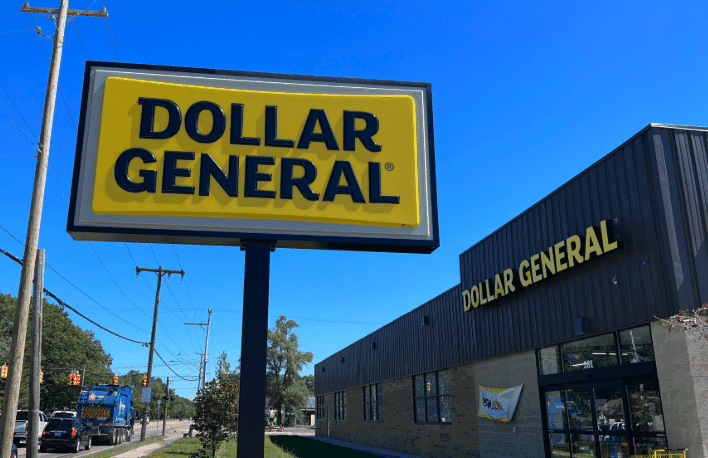
- Dollar Stores and Discount Retail: Despite some tenant-level headwinds, absolute NNN structures with long lease terms continue to attract yield-focused buyers.
- Auto Parts and Service: Retailers in the automotive aftermarket sector have demonstrated consistent rent coverage and recession-resistant demand, fueling compression in this category.
- Medical and Dental Outpatient: Healthcare-adjacent NNN assets are commanding premium pricing as investors prize their mission-critical nature and sticky tenancy.
- Convenience Stores and Fuel: Long-lease, corporate-guaranteed c-store assets remain a flight-to-quality play, with cap rates firming at historically competitive levels.
The Interest Rate Factor
Cap rate movement in the net lease market does not happen in a vacuum — it is closely tethered to the interest rate environment and, increasingly, to investor expectations about where rates are headed. As market participants price in a more accommodative Fed posture over the coming quarters, the yield spread between NNN assets and risk-free alternatives such as Treasuries is beginning to look more attractive. This improving spread dynamic is one of the primary engines driving renewed demand and the compression now emerging in top-tier assets.
Importantly, it is the anticipation of rate movement — not the cuts themselves — that tends to drive cap rate behavior. Investors who wait for official Fed action before transacting often find that the best pricing opportunities have already passed.
Actionable Advice for Today’s NNN Investors
- Sellers: Reexamine assets you may have held back during the 2022–2023 repricing cycle. Demand is improving and the window for favorable exit pricing is opening.
- Buyers: Prioritize assets with long lease terms, corporate guarantees, and rent escalations. These fundamentals matter most when cap rates compress and income growth becomes the primary return driver.
- All investors: Stress-test your underwriting against a range of rate scenarios, not just the base case. Cap rate compression can be interrupted by macro surprises, and durability of cash flow should always anchor your investment thesis.
Outlook for the Next 6 to 12 Months
The broad consensus among net lease market participants points toward continued modest compression in top-tier NNN assets over the next two to four quarters, particularly if rate relief materializes on the timeline currently anticipated by the market. Transaction volume is expected to climb, and competition for the highest-quality deals — long-term leases, strong credit, essential-use tenants — will intensify.
For investors who have been sitting on the sidelines, the present moment carries strategic weight. Entering the market during stabilization, before compression accelerates, has historically produced superior risk-adjusted returns. The next 6 to 12 months may represent one of the more compelling NNN entry points of the current cycle — and those who act with conviction and careful underwriting are likely to benefit most.
Sources
- CoStar Group — Net Lease Market Research and Cap Rate Trend Data (https://www.costar.com)
- CBRE — U.S. Net Lease Investment Outlook (https://www.cbre.com)
- Marcus & Millichap — Net Lease Research Reports (https://www.marcusmillichap.com)
- Stan Johnson Company — Net Lease Market Intelligence (https://www.stanjohnsonco.com)
- Boulder Group — Net Lease Market Report (https://www.bouldergroup.com)
- Federal Reserve — Federal Open Market Committee Statements and Rate Policy Updates (https://www.federalreserve.gov)
Ready to put this into practice?
Browse hundreds of off-market NNN properties, or talk to our team about your 1031 exchange timeline.