Uncategorized
NNN Cap Rates Are Finally Stabilizing: What Investors Should Do Right Now
6 min read

NNN Cap Rates Are Finally Stabilizing: What Investors Should Do Right Now
The End of an Era: Understanding Three Years of Cap Rate Expansion
For the past three years — spanning twelve consecutive quarters — investors in net lease commercial real estate watched cap rates climb steadily higher. In plain terms, that means property values were falling relative to the income they generate. Every quarter brought wider spreads, tighter deal flow, and more uncertainty about where the floor might be. For buyers, it was a moving target. For sellers, it was a slow erosion of peak valuations. In 2026, that cycle finally appears to be losing momentum — and the data is beginning to reflect something the NNN market hasn’t seen in quite some time: stabilization.
Understanding what this shift means — and how to act on it — could define the next phase of your investment strategy.
What Stabilization Actually Signals for Buyers and Sellers
Stabilization doesn’t mean the market is roaring back overnight. What it does mean is that the directional pressure on cap rates has paused. For buyers, this is a meaningful development: it signals that the window of maximum yield opportunity may be narrowing. Waiting another quarter or two in hopes of even higher cap rates carries increasing risk of mistiming the cycle. For sellers, stabilization offers a more predictable pricing environment — one where deals can be structured and closed without the fear that values will deteriorate further before reaching the finish line.
In short, the bid-ask gap that paralyzed transaction volume over the past several years is beginning to close, and deal velocity is quietly picking back up in select asset categories.
Which NNN Asset Classes Are Stabilizing First
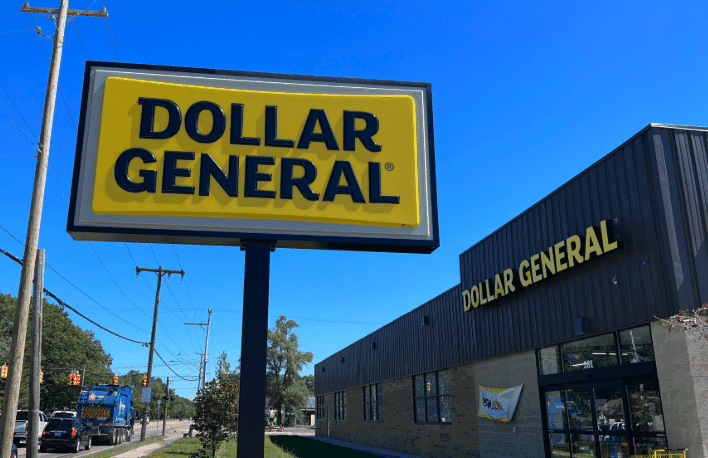
Not all net lease sectors are moving in lockstep. The early signs of cap rate stabilization are most visible in three specific asset classes: quick-service restaurants (QSR), dollar stores, and pharmacies. These categories share a common thread — they are anchored by investment-grade or near-investment-grade tenants operating businesses with demonstrated recession-resistant demand. Fast food concepts backed by franchisees with strong corporate guarantees continue to attract a deep buyer pool. Dollar store formats, despite some headline-level operational pressures on certain chains, remain attractive due to their absolute net lease structures and long initial terms. Pharmacies, meanwhile, are drawing renewed interest as investors re-evaluate their essential-service positioning.
These three categories are leading the stabilization trend because institutional and private capital alike view them as lower-risk entry points in an uncertain macroeconomic environment.
Does Stabilization Mean Compression Is Next?
History offers a useful guide here. In prior rate cycles, cap rate stabilization has typically preceded compression by two to four quarters — once the Federal Reserve signals a sustained easing posture and debt markets respond with improved loan pricing. That pattern isn’t guaranteed to repeat perfectly, but it does suggest that investors who act during the stabilization phase have historically captured more favorable pricing than those who waited for compression to be confirmed.
The key variable in 2026 remains the interest rate environment. The Federal Reserve has maintained a cautious stance, and while long-term Treasury yields have pulled back modestly from their cycle highs, borrowing costs for commercial real estate remain elevated relative to the pre-2022 environment. That said, the spread between NNN cap rates and the 10-year Treasury — which compressed painfully during 2021 and early 2022 — has meaningfully improved, making the risk-adjusted return profile of net lease assets more compelling again.
Actionable Advice for Investors on the Sidelines
If you’ve been waiting for the “all clear” signal before deploying capital into net lease assets, here is the practical guidance that matters most right now:
- Stop waiting for the bottom. Markets rarely ring a bell at the absolute trough. Stabilization is the signal — not compression.
- Prioritize credit quality. Focus on investment-grade or nationally recognized tenants with long remaining lease terms and rent escalation clauses built into the agreement.
- Run your cost-of-capital math carefully. With financing costs still elevated, unlevered returns and all-cash acquisitions deserve a closer look than they did in the low-rate era.
- Target the leading sectors. QSR, dollar stores, and pharmacies offer the clearest near-term stability. Secondary asset classes may follow, but the risk-reward is less defined.
- Think in five-to-ten-year horizons. NNN investing rewards patience. Investors who entered during previous periods of uncertainty — 2009, 2012, 2016 — were significantly rewarded by the time the next expansion cycle peaked.
How Interest Rates Interact With the Current Stabilization
One of the most misunderstood dynamics in net lease investing is the relationship between interest rates and cap rates. They don’t move in perfect tandem, but they are meaningfully correlated. As rates elevated sharply from 2022 through 2024, cap rates had to expand to maintain viable debt coverage ratios and acceptable returns. Now that rates appear to have plateaued, the upward pressure on cap rates has eased — which is precisely what is producing the stabilization we’re observing today.
For leveraged buyers, even a modest improvement in financing terms — 25 to 50 basis points off peak borrowing costs — can materially change the economics of a deal. Investors should be modeling multiple rate scenarios and working closely with lenders to understand current execution before making assumptions on returns.
Why 2026 May Be a Strategic Entry Point for Long-Term NNN Investors
Every meaningful NNN buying opportunity in modern history looked uncertain from the inside. The investors who built the most durable net lease portfolios didn’t wait for perfect conditions — they acted when the risk-reward balance shifted in their favor, even if the macro picture still carried noise. That moment appears to be arriving again in 2026.
Twelve quarters of expansion have reset return expectations. Stabilization has reduced directional risk for buyers. Credit tenants continue to sign long-term leases, and the structural appeal of passive, predictable income from absolute net lease properties hasn’t changed. For long-term investors, the combination of improved yields, stabilizing pricing, and a potential compression cycle on the horizon represents a compelling case to move from the sidelines to the closing table.
The window during which cap rates sit at elevated levels without yet compressing is historically narrow. At Triple Net Direct, we believe that window is open right now — and the investors who recognize it first are the ones who will look back on 2026 as the year they made one of their best allocation decisions.
Sources
- CoStar Group — Net Lease Market Analytics, Q1 2026 (costar.com)
- CBRE Research — U.S. Net Lease Investment Outlook 2026 (cbre.com)
- Marcus & Millichap — Net Lease Research Report, Early 2026 (marcusmillichap.com)
- The Boulder Group — Net Lease Market Report, Q4 2025 / Q1 2026 (bouldergroup.com)
- Federal Reserve — Federal Open Market Committee Statements, 2025–2026 (federalreserve.gov)
- U.S. Treasury Department — 10-Year Treasury Yield Historical Data (home.treasury.gov)
Ready to put this into practice?
Browse hundreds of off-market NNN properties, or talk to our team about your 1031 exchange timeline.