Uncategorized
QSR Tenant Expansions Are Driving Demand for NNN Properties in 2026
3 min read
QSR Tenant Expansions Are Driving Demand for NNN Properties in 2026
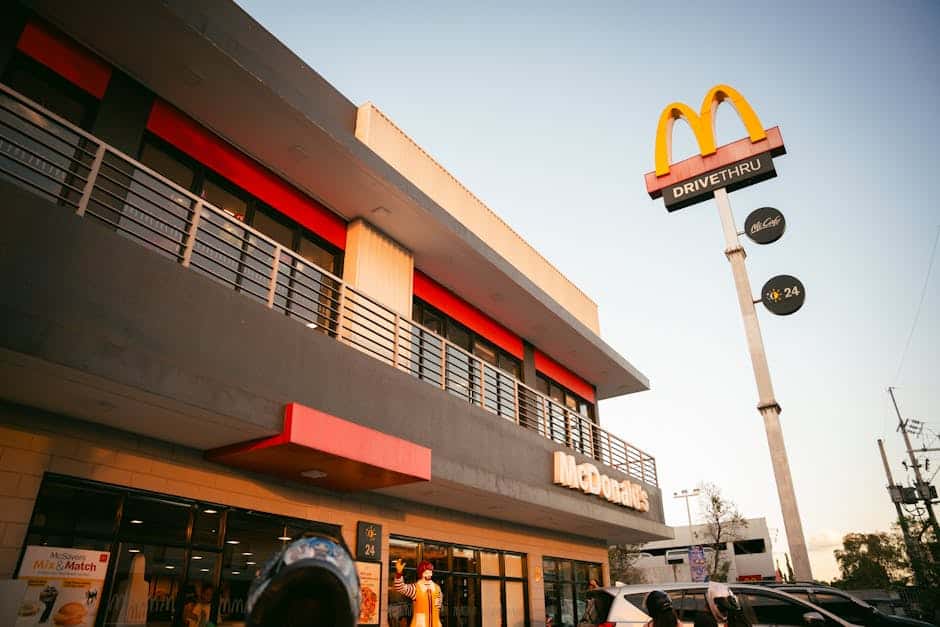
The quick-service restaurant sector continues to be one of the most active forces shaping the net lease investment landscape in 2026. From legacy giants like McDonald’s to high-growth concepts such as Chick-fil-A and Taco Bell, QSR operators are aggressively expanding their physical footprints — and in doing so, they are creating a steady pipeline of premium single-tenant net lease opportunities for investors seeking durable, low-management income streams.
Why QSR Tenants Dominate the NNN Market
Net lease investors have long favored quick-service restaurant tenants for a straightforward reason: these brands generate consistent, high-volume revenue even during periods of broader economic uncertainty. Fast food is widely regarded as a recession-resilient business model, with consumer demand remaining relatively stable when discretionary spending tightens. That fundamental strength translates directly into the investment-grade credit profiles that NNN investors prioritize when evaluating long-term lease security.
Ground lease structures, in particular, have become closely associated with the QSR category. McDonald’s ground leases are widely recognized as among the tightest-priced assets in the entire net lease universe, routinely trading at cap rates that reflect the brand’s unmatched global recognition and corporate credit backing. When an asset combines a long-term absolute NNN ground lease with a top-tier QSR operator, the result is an investment that behaves more like a fixed-income instrument than a traditional real estate holding.
Expansion Activity Fueling New Inventory
Heading into 2026, several major QSR chains have made domestic expansion a stated strategic priority. Chick-fil-A, despite its famously selective franchising model, continues to open new locations at a measured but consistent pace, particularly in suburban growth corridors across the Sun Belt and Southeast. Each new Chick-fil-A development represents a highly coveted NNN asset the moment it hits the investment sales market, often attracting multiple competing offers and compressing yields accordingly.
Taco Bell, operating under a large and well-capitalized parent company, has been pushing into underserved markets and pursuing drive-thru-focused prototypes that align well with post-pandemic consumer preferences. These purpose-built, drive-thru-only formats are particularly attractive to net lease buyers because the real estate is designed specifically around the tenant’s operational model, reducing the likelihood of early lease termination or dark store risk.
Other concepts accelerating their real estate pipelines include Raising Cane’s, Dutch Bros, and several emerging regional QSR brands that are beginning to attract institutional-level net lease attention as their unit counts scale and franchisee credit improves.
What Investors Should Watch in 2026
The competitive dynamics in QSR net lease acquisitions remain intense. Buyers pursuing investment-grade fast food assets should be prepared to act decisively, as well-located properties with strong operators and long lease terms continue to move quickly. Key evaluation criteria include:
- Remaining lease term and renewal option structure
- Rent escalation clauses (annual bumps vs. flat leases)
- Corporate versus franchisee guarantee strength
- Drive-thru access, visibility, and traffic counts at the site level
- Market positioning within trade areas showing population growth
Cap rate compression on trophy QSR assets has not deterred demand — if anything, the scarcity of truly high-quality product has reinforced pricing discipline among sellers. For 1031 exchange buyers in particular, QSR net lease properties offer the combination of passive income, credit-quality tenants, and minimal landlord obligations that makes them a perennial first choice.
The Outlook Remains Favorable
As long as QSR operators continue prioritizing owned real estate and ground lease structures as part of their growth strategies, the NNN market will benefit from a reliable flow of new, high-quality single-tenant inventory. Investors who understand the nuances of QSR lease structures, credit hierarchies, and site selection factors will be best positioned to capitalize on this continued expansion cycle throughout 2026 and beyond.
Sources
- CoStar Group — QSR Net Lease Market Data, Q1 2026 (costar.com)
- Matthews Real Estate Investment Services — Net Lease QSR Sector Report, Q1 2026 (matthews.com)
- The Boulder Group — Net Lease QSR Research Report (bouldergroup.com)
- Restaurant Business Online — QSR Expansion Tracking, 2025–2026 (restaurantbusinessonline.com)
- CBRE — Net Lease Investment Trends Report, Early 2026 (cbre.com)
Ready to put this into practice?
Browse hundreds of off-market NNN properties, or talk to our team about your 1031 exchange timeline.